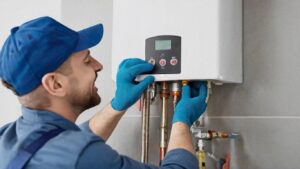
A tankless water heater can make sense when you want hot water produced as you use it instead of keeping dozens of gallons heated in a storage tank. Blue Mountain Plumbing, Heating & Cooling provides tankless water heater installation in Fishersville and Shenandoah Valley, VA for homeowners replacing older equipment, converting from a traditional tank, or planning hot water service for a new space.
Â
The quality of the installation matters just as much as the equipment itself. Our fully licensed and insured plumbers look at household demand, available fuel or electrical capacity, plumbing connections, venting requirements, and installation location before recommending a system.
Â
Ready to plan a tankless upgrade? Call (540) 942-2700 to talk through your project, or schedule service online.
Start With the Hot Water Your Household Actually Uses
Tankless water heaters are sized around flow rate and temperature rise rather than tank capacity. That means the number of showers, faucets, appliances, and other fixtures that may run at the same time directly affects the equipment you need.
Â
A household that regularly uses one shower at a time has different requirements from one that may run multiple showers, a dishwasher, and a washing machine together. Blue Mountain evaluates those habits before equipment is selected so the system is designed around realistic peak demand.
What Our Tankless Installations Include
Installing tankless equipment can involve several parts of the plumbing and utility systems. Blue Mountain can evaluate the complete project rather than treating the heater as a stand-alone appliance.
Â
Our installation services include:
Â
- New tankless water heater installation: Install on-demand equipment in homes that are already set up for tankless operation or are adding a new hot water system.
- Tank-to-tankless conversion: Replace a conventional storage water heater with tankless equipment and make the supporting changes required for the new system.
- Tankless water heater replacement: Remove an older on-demand unit and install new equipment when the existing system has reached the end of its practical service life.
- System sizing: Calculate expected hot water demand so the unit can support the household’s typical simultaneous fixture use.
- Gas supply evaluation: Check whether applicable gas piping and capacity can support the input requirements of the new equipment.
- Electrical evaluation: Confirm the electrical requirements for controls, ignition, or electric tankless equipment before installation.
- Venting setup: Install or modify applicable venting according to the selected unit and installation location.
- Water connection installation: Connect the unit to the home’s hot and cold water piping and make necessary plumbing adjustments.
- Condensate provisions: Address condensate drainage when required by the type of high-efficiency equipment being installed.
- Startup & operation check: Test the installed system and confirm normal hot water production before the project is complete.
Our plumbers can also explain ongoing tankless water heater services so you know what maintenance the new system will need after installation.
Converting From a Storage Tank Takes Planning
A tankless conversion is not always a direct appliance swap. Traditional tank heaters and tankless systems can have different gas, electrical, venting, drainage, and mounting requirements.
Â
That is why Blue Mountain evaluates the installation site before recommending equipment. Identifying needed changes in advance gives homeowners a clearer understanding of the complete project instead of discovering additional requirements after the old water heater has already been removed. Installation is planned around manufacturer instructions and applicable local code requirements, including any permit or inspection steps that apply to the project.
Gas Tankless Water Heater Installation
Gas-fired tankless water heaters can produce large amounts of hot water, but their fuel and venting requirements may differ considerably from those of an older storage-tank heater.
Â
The existing gas line must be able to support the new unit alongside other gas appliances in the home. Venting also has to match the manufacturer’s requirements and the installation location. Our plumbers account for those details when planning the system.
Electric Tankless Water Heater Installation
Electric tankless systems do not require combustion venting, but they can require substantial electrical capacity depending on their size and application. The home’s existing electrical service needs to be considered before equipment is selected.
Â
In some homes, the electrical upgrades required for a whole-home electric tankless system can affect the economics of the project. Reviewing those requirements first helps homeowners compare options based on the complete installation rather than the water heater alone.
Choosing a Location for Tankless Water Heater Installation
Tankless equipment is compact and wall-mounted, which can open up space previously occupied by a storage tank. That does not mean it can be installed anywhere.
Â
Access to water piping, utilities, venting, drainage, manufacturer clearances, and future service all matter. Blue Mountain can evaluate the available locations and recommend a setup that supports proper operation while leaving technicians reasonable access for maintenance and repairs.
Benefits of Going Tankless
Tankless water heaters appeal to homeowners for several reasons, but the value of each benefit depends on the household and installation.
Â
Potential advantages include:
Â
- On-demand hot water: Heat water as it passes through the unit instead of relying on a stored supply.
- More continuous hot water: Properly sized equipment can continue producing hot water without waiting for a storage tank to recover.
- Compact equipment: Wall-mounted units generally use less floor space than conventional tank water heaters.
- Reduced standby heating: Energy is not continually used to maintain a full tank of hot water between uses.
- Long-term equipment option: Properly installed and maintained tankless systems can offer a long service life.
- Flexible installation possibilities: Compact dimensions may provide additional placement options when the supporting utilities allow it.
Going tankless is a good move for many households, though not all of them. Upfront installation requirements, household demand, fuel availability, and expected usage should all be part of the decision.
Installation Is Only the Beginning
Water in parts of the Shenandoah Valley can carry a fair amount of dissolved minerals, so scale control is worth discussing when a new unit is planned. Those minerals can collect inside the heat exchanger and affect performance if buildup is allowed to continue.
Â
Periodic flushing and inspection help manage scale and give a plumber an opportunity to check the system for developing operating issues. Planning for maintenance from the beginning can help protect the investment made in the new equipment.
Tankless Water Heater Installation FAQs
What size tankless water heater does my home need?
Sizing depends on how many fixtures may use hot water at the same time, their combined flow rate, and how much the incoming water temperature must be raised. Blue Mountain can calculate those needs before recommending equipment.
Can a tankless unit take the place of my current tank heater?
Often, yes. Before the conversion is planned, our plumbers will check gas or electrical capacity, venting, piping, and the available location.
Does tankless mean hot water the moment I open the tap?
Not always. The heater fires up when water starts flowing, but water already cooling in the pipes between the unit and your faucet has to clear first, so longer pipe runs mean a longer wait.
Is gas or electric better for a tankless water heater?
The better choice depends on available utilities, household demand, existing system capacity, installation costs, and how the equipment will be used. The right fuel varies from one property to the next.
Is financing available for tankless water heater installation?
Yes. Financing is available for qualifying projects, subject to credit approval, which can spread out the expense of a tankless installation or tank-to-tankless conversion.
Local Plumbing Experience Since 2002
Since 2002, Blue Mountain Plumbing, Heating & Cooling has been installing and servicing plumbing equipment for Shenandoah Valley homeowners. Our fully licensed and insured plumbers also handle plumbing repair, drain cleaning, repiping, and water heater repair, so one company can see a tankless project through from planning to later service.
Â
Same-day service is available for many plumbing concerns, and homeowners can review customer feedback or learn more about Blue Mountain.
Tankless Installation Throughout the Shenandoah Valley
Homeowners in Fishersville, Waynesboro, Staunton, Stuarts Draft, Verona, Churchville, Weyers Cave, Harrisonburg, and across our service area can count on Blue Mountain for tankless water heater installation.
Â
Our broader plumbing services also give homeowners one team to call if a tankless installation reveals related piping, water supply, drainage, or other plumbing needs.
Install a Tankless System Around the Way Your Home Uses Water
The right tankless water heater is not simply the largest unit or the model with the longest feature list. It is the system that can meet the household’s hot water demand and work correctly with the plumbing, fuel, electrical, and venting conditions already present in the home.
Â
Blue Mountain Plumbing, Heating & Cooling provides tankless water heater installation in Fishersville and Shenandoah Valley, VA with the planning needed to get those details right before the new equipment goes into service.
Â
Ready for a tankless upgrade? Call (540) 942-2700 or book your installation online today.
